Join Our Mailing List
Get the Latest on Physical AI

Watch an autonomous mobile robot (AMR) navigate in a busy warehouse, and you will encounter an expensive paradox. The robot is exceptionally good at stopping, and completely incapable of understanding why it stopped.
A strip of reflective floor tape peeling in an aisle, a high-contrast glare of afternoon sunlight cutting across a dock bay, a hanging plastic freezer curtain – to a conventional geometric navigation stack, every one of these harmless visual features can register as an impassable barrier. The robot executes a safety halt, attempts to plan a path around the obstacle, yet sits stranded in a high-traffic lane, waiting for a human technician to clear the “hazard.”
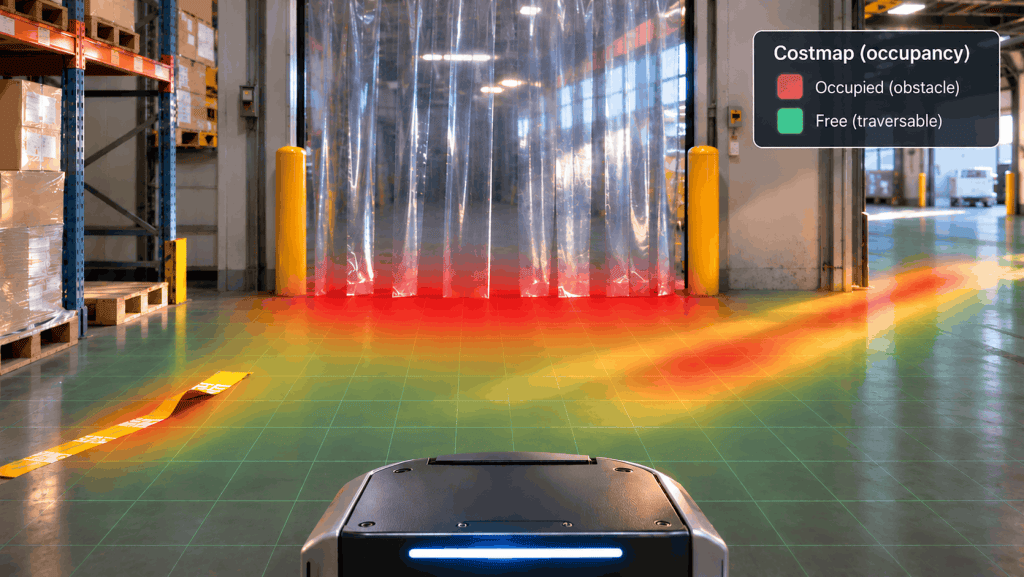
Figure 1: An Occupied Cell in a Costmap Can’t Explain “Why”
Geometric blindness is a fundamental limitation of first-generation autonomy. Traditional AMRs measure raw distance rather than physical reality. If a spatial cell in a costmap is occupied, the navigation stack treats it as a solid obstruction. It has no mechanism to determine whether that object is a steel bollard, a traversable shadow, or a harmless piece of shrink-wrap.
The Failure of Conventional Avoidance
Moving from blind obstacle avoidance to actual scene comprehension requires on-device multimodal reasoning.
Consider a common warehouse scenario. An AMR carrying a pallet of goods detects a cardboard box sitting directly in its path. Under standard obstacle avoidance rules, the robot simply plots a route around it. But what if that box fell off the robot’s own payload? By swerving around it, the robot abandons its inventory, completes an invalid delivery, and leaves a hazard in the lane for the next vehicle.
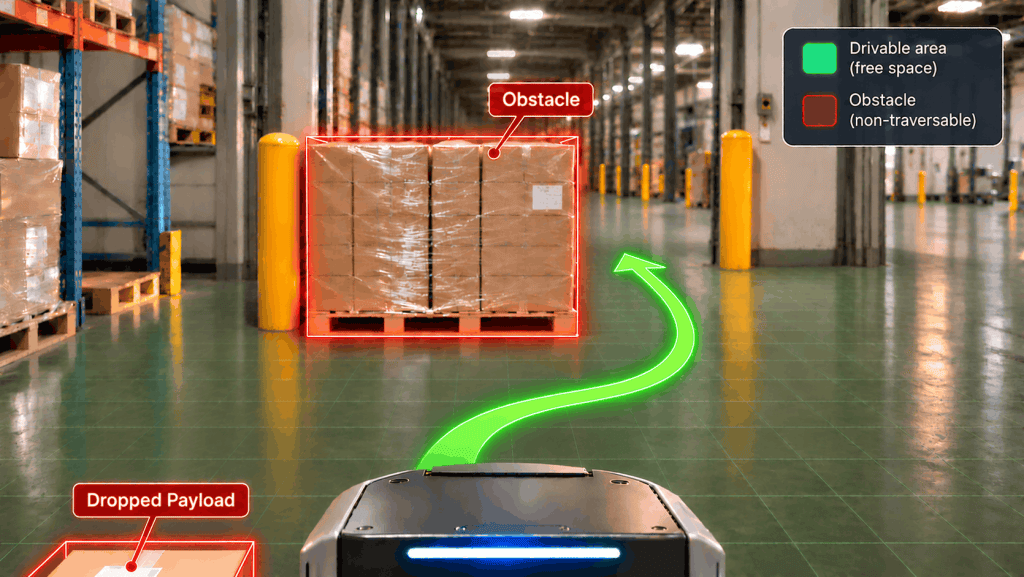
Figure 2: An AMR should maintain situational awareness and context while it navigates
See More With On-Device Reasoning
A robot with on-device multimodal reasoning handles this scenario with greater operational intelligence:
Can Reasoning Hijack Real-Time Performance?
Robotics marketing often promises that you can simply layer modern generative AI onto existing general-purpose GPU modules. In practice, that assumption can break down quickly. Vision-Language Models are computationally heavy. When you launch a multi-billion-parameter multimodal model on a monolithic GPU architecture, the model suddenly commandeers execution units and saturates shared memory bandwidth.
The negative consequences for a mobile platform are severe:
Physical AI Cognition Requires the Right Silicon
Running sophisticated visual reasoning alongside continuous real-time perception requires more than raw compute performance. It demands an architecture that can efficiently execute diverse AI workloads concurrently, without sacrificing responsiveness or exceeding the robot’s power budget.
SiMa.ai’s Modalix MLSoC addresses these challenges through a heterogeneous compute architecture that combines Arm CPU cores, dedicated vision processing resources, and a purpose-built Machine Learning Accelerator (MLA).
SiMa.ai’s Palette Software Suite enables this architecture by simplifying model deployment and application development across heterogeneous compute resources, helping developers bring advanced perception and reasoning capabilities to AMRs using an agentic design flow, without the complexity of low-level hardware optimization.
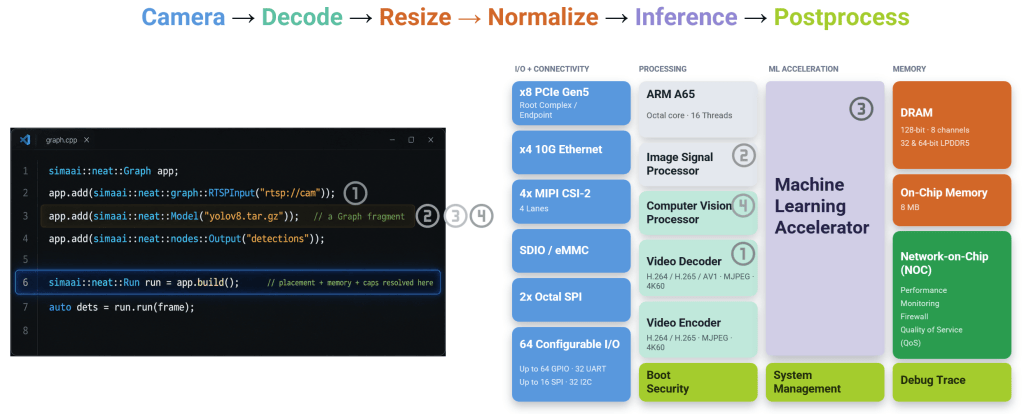
Figure 3: The answer is intelligent design software and heterogeneous silicon
Making It All Work
Fleet profitability is not won on benchmark charts but on Mean Time Between Interventions (MTBI). When a fleet scales from 10 robots to 500, sending human technicians onto the floor to reset robots stalled by peeling floor tape or dropped boxes destroys operating margins.
Autonomy doesn’t come from forcing massive generative models onto compute platforms that strain a robot’s power and thermal budgets and overheat your chassis. It comes from an architecture balanced enough to reason about the physical world without losing control of the drive motors, all locally, and all within a sub-10-watt envelope.
With SiMa.ai’s Modalix MLSoC, AMRs can do more than see obstacles. They can understand what they’re seeing.
Explore real-time computer vision and on-device VLMs in our whitepaper: Building Smarter, More Efficient AMRs with Integrated AI Compute and Software.